
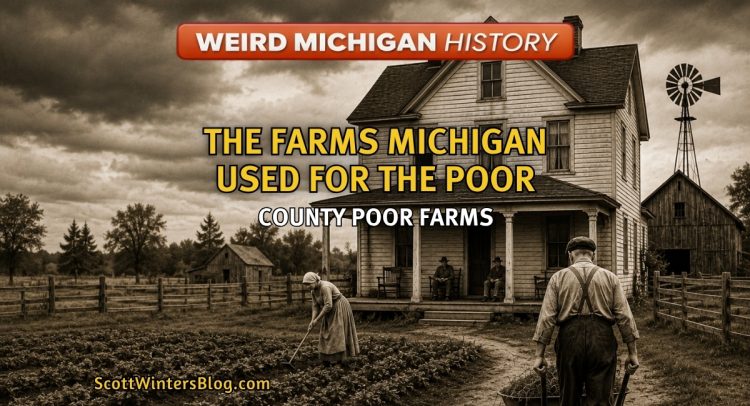
Before Michigan had modern welfare programs, nursing homes, or large public assistance systems…
Many counties had something called a “poor farm.”
And yes — it was exactly what it sounds like.
Beginning in the 1800s, counties across Michigan created working farms where poor, older people, disabled, or struggling residents could live in exchange for labor.
If someone had nowhere else to go, the county might send them to the farm.
Residents often worked the land, cared for animals, cooked meals, repaired buildings, or handled chores around the property.
Some poor farms were small and simple.
Others operated almost like self-contained communities.
The Weird Part
Today, most people have never even heard of poor farms.
But for decades, they existed all across Michigan.
Many counties had one.
And while some were run compassionately, others developed reputations for harsh conditions, overcrowding, or treating residents more like workers than people needing help.
Some poor farms eventually became:
- county hospitals
- nursing homes
- public health facilities
- or disappeared entirely
A few old buildings still exist today — quietly hiding in plain sight.
Michigan Tie-In
Poor farms once operated throughout Michigan, especially in rural counties during the late 1800s and early 1900s.
At the time, they were considered practical solutions to poverty before modern social programs existed.
It’s one of those forgotten parts of Michigan history that feels surprisingly recent once you learn about it.
Final Thought
It’s strange to think that not all that long ago…
If life fell apart, the county might send you to live and work on a farm.
History gets very real, very fast sometimes.
.
