
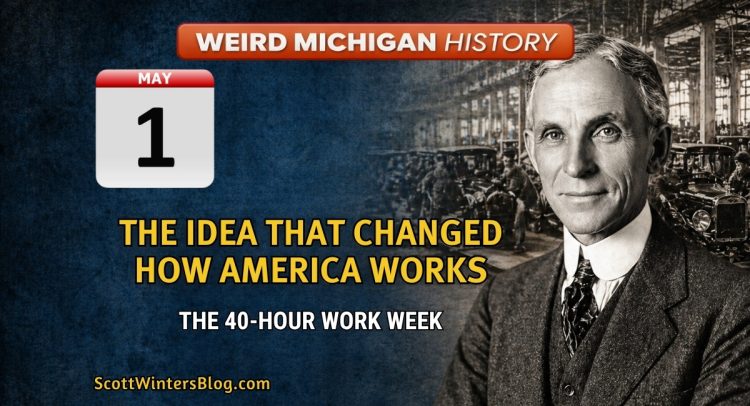
Today, a 40-hour workweek feels completely normal.
But in the early 1900s?
That idea sounded downright crazy.
On May 1, 1926, Henry Ford and the Ford Motor Company officially moved to a five-day, 40-hour workweek — cutting back from the standard six-day grind most Americans were used to.
At the time, factory workers often put in long hours, six days a week. The idea of working less wasn’t just unusual — it was seen as bad business.
Why would a company willingly reduce working hours?
Ford had a different idea.
He believed that if workers had more time off, they would:
- Be more productive
- Be happier
- And (this is the key part)… spend more money
Including on things like… cars.
The Weird Part
Ford wasn’t just being generous — he was being strategic.
He realized something most companies hadn’t yet figured out:
If workers had time to enjoy life, they’d actually buy the products they were helping build.
In other words…
Give people time off → they go places → they need cars → business grows.
At the time, many business leaders thought this would backfire.
Instead, it helped reshape the American economy.
Michigan Tie-In
This all happened right in Detroit — the heart of the auto industry.
Michigan didn’t just build cars…
It helped build the modern workweek.
Final Thought
What once sounded like a risky experiment is now just… normal life.
Not bad for an idea people thought would never work.
.
