
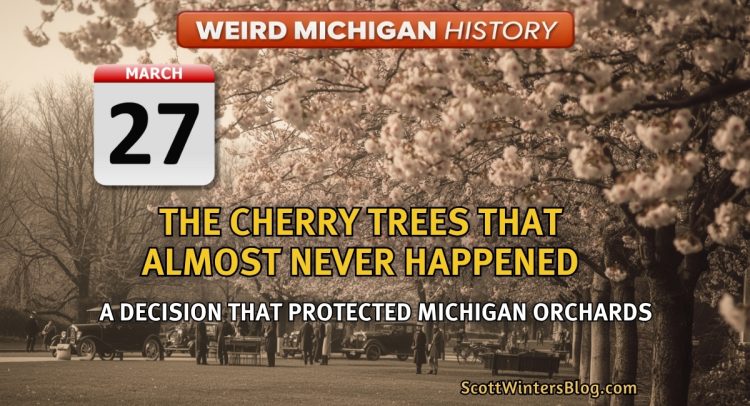
Every spring, Washington, D.C. explodes in pink.
Tourists flood the city. Photos take over social media.
It’s one of the most recognizable seasonal events in the country.
But the story behind those famous cherry blossoms?
It has a surprising connection to Michigan.
In 1912, Japan gifted thousands of cherry blossom trees to the United States as a symbol of friendship.
They were planted around the Tidal Basin and quickly became a national treasure.
Simple enough, right?
Not quite.
Two years earlier… things went very differently.
The first shipment of trees arrived in 1910.
And they were a disaster.
Infested with insects. Carrying disease.
Officials made a tough call.
They destroyed every single tree.
Wait… really?
Yep. Thousands of trees — burned.
So why does that matter to Michigan?
Because at the time, agriculture was everything.
And Michigan — especially areas like Traverse City — was already becoming a powerhouse for cherry production.
Introducing foreign pests could have wiped out entire orchards.
🤯 The Weird Part
The cherry blossoms we celebrate today almost never happened.
If those first trees hadn’t been rejected and destroyed, invasive pests might have spread across the country.
Including into Michigan’s fruit belt.
One bad decision… and the story could’ve been completely different.
📍 Michigan Connection
Michigan is one of the top cherry-producing states in the U.S.
The caution shown in rejecting those early trees helped protect orchards here at home.
So while the blossoms bloom in Washington…
Their success is tied to protecting places like Traverse City.
💭 Final Thought
Every spring, people admire the beauty of cherry blossoms.
But behind that beauty is a story most people never hear.
A story about risk.
About prevention.
And about a decision that quietly protected Michigan… while shaping a national tradition.
.
